The only requirement for a successful relationship is truth.
We must continually incorporate new knowledge (better reasoned truths) and update our truths. This can only be done with open minds, observation and testing our beliefs which are the result of our past: how we were brought up by our parents; how we were influenced by those around us; how we chose to react to events.
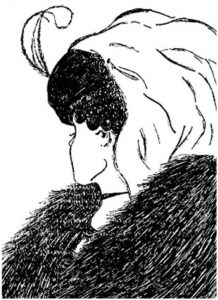
Today’s problems are the result of yesterdays thinking.
We interpret what we observe and experience by forming perceptions which are our truths,
Most of our truths we reach are based upon our socially conditioned belief systems.
With an open mind we can change those perceptions which open the future to all possibility. With a closed mind nothing can change!
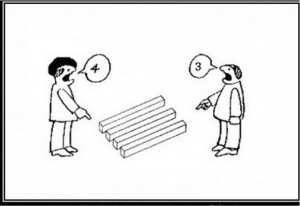
Change can only come from within – our thinking. That is influenced by the world outside of our minds. Our freewill allows what observe by the use of reason to recreate our perceptions and beliefs, thereby resulting in different actions in the future.
Language plays and important role and depending upon the meanings associated with words our perceptions of situations will have different meanings just like we can have different meanings to our visual interpretations from these pictures.
Be the change you want to see. It all starts with you and me!
“Truth” and “Fact” are often used synonymously, but are different especially in reference to legal pleadings.
TRUTH. Conceptions as to what constitutes “truth”: Agreement of thought and reality; consistency of thought with itself; and eventual verification.
PRIMA_FACIE, Lat. At first sight; on the first appearance; on the face of it; so far as can be judged from the first disclosure; presumably; a fact presumed to be true unless disproved by some evidence to the contrary. Admitting the facts stated in a complaint, the truth may be that the plaintiff is not entitled, upon the face of his complaint, to what he claims.
PRIMA FACIE EVIDENCE. Evidence good and sufficient on its face; such evidence as, in the judgment of the law, is sufficient to establish a given fact, or the group or chain of facts constituting the party’s claim or defense, and which if not rebutted or contradicted, will remain sufficient.
PRESUMPTION OF FACT. An inference affirmative or disaffirmative of the truth or falsehood of any proposition or fact drawn by a process of probable reasoning in the absence of actual certainty of its truth or falsehood, or until such certainty can be ascertained.
Presumptions have the effect of evidence. Presumptions are not “evidence” but a substitute for evidence.
PROOF. The effect of evidence; the establishment of a fact by evidence. Any fact or circumstance which leads the mind to the affirmative or negative of any proposition.. The conviction or persuasion of the mind of a judge or jury, by the exhibition of evidence, of the reality of a fact alleged.
FACT. A thing done; an action performed or an incident transpiring; an event or circumstance; an actual occurrence. An actual happening in time or space or an event mental or physical. Show MoreA fact in pleading is a circumstance, act, event, or incident; a truth is the legal principle which declares or governs the facts and their operative effect.
Blacks Law Dictionary 4th Edition.
 wpDiscuz